The world economy is really feeling the effects of currency devaluation now. Currency prices are not moving in the desired directions because of a mismatch in the way countries do business with each other.
Governments intentionally devalue their currency by lowering its value against foreign currencies to improve trade competitiveness. They make the money worth less compared to the money in countries. They do this so they can sell things to other countries and make their trade better. This helps them sell things to other countries, like exports. It also helps fix the problems they have with trade, which’s when they buy and sell things with other countries.
This blog will walk you through the causes, effects, and economic impact of currency devaluation in Pakistan, along with its influence on trade, industries, and future outlook.
What is Currency Devaluation and its role in the Economy
When a country’s money is not worth much as it used to be compared to other countries money that is called currency devaluation. So if a country’s money is worth less the things they sell to countries are cheaper but the things they buy from other countries are more expensive.
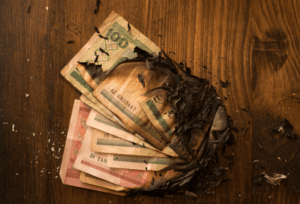
This can be good for trade because it helps a country sell things to other countries.. It can also be bad because it can make prices go up and make it harder for people to buy the things they need. So while currency devaluation can help a country’s economy grow the people in charge have to be careful, about how they do it. Currency devaluation is a deal and it affects the economy so we have to think about currency devaluation when we talk about the economy.
Economic Condition of Pakistan’s weaker Currency
The country’s currency devaluation means its value decreases compared to countries currencies. This decrease is a tool used in policies to improve a country’s trade balance. It helps countries with an industrial base or a large export economy, where a high local currency value makes their products less competitive. When a country devalues its currency its products become cheaper and more competitive in the market.
In Pakistan’s case the value of the rupee dropped significantly. In December 2017 one US dollar was worth 105 rupees. By November 2018 the value of the rupee had decreased to around 140 rupees per US dollar.
Critical Analysis of Pakistan’s Economic Condition
The Economic Condition of Pakistan is an issue. Looking at the year 2018 it is clear that the Pakistan economy did well and the growth of the economy reached a point of 5.8 percent. This growth was mainly because people were spending money. The government of Pakistan made some decisions that helped the economy. These decisions also caused some big problems. The difference between what Pakistan was selling to countries and what it was buying from them was the biggest it had been in a long time. In 2018 this difference was 6.3 percent but in 2017 it was around 4.3 percent.
The value of the Pakistan Rupee is also a problem. When the value of a country’s money goes down it affects the businesses that buy and sell things to countries. The Pakistan Rupee lost value because the Central Bank of Pakistan could not control it due to pressure and a big difference between what Pakistan was selling and buying from other countries, which was around 19 billion dollars, in 2018. People were also waiting to see if the International Monetary Fund would help Pakistan, which made things worse.
The Economic Condition of Pakistan and the value of the Pakistan Rupee are concerns. The government of Pakistan needs to make some good decisions to fix the Economic Condition of Pakistan and help the Pakistan Rupee. The Economic Condition of Pakistan is very important. It needs to be fixed soon.
Pakistan’s Trade Relations and Balance of Payments
In order to make the economic and commercial relationship with countries better, Pakistan wants to improve its exports. This means Pakistan will try to sell things to other countries than it buys from them.
Recently the Prime Minister of Pakistan decided to stop trading with India. Before this Pakistan was buying things like tomatoes and potatoes from India. This was bad for Pakistan’s farmers so stopping trade with India might help Pakistan’s farming industry and reduce the trade deficit. This could also help Pakistan have a trade balance.
However the China Pakistan Economic Corridor, which is very important for Pakistan’s economy is being delayed. This is causing problems for Pakistan’s economy and industries. If special economic zones are built under the China Pakistan Economic Corridor it could attract investors from countries. This could help develop Pakistan’s industries reduce imports and increase exports.
Exports can be increased by giving subsidies and tax breaks to producers, which was already discussed. Imports can be decreased by increasing taxes, on imported goods producing things in Pakistan that are currently imported and encouraging people to use Pakistani products.
Performance of Key Industries in Pakistan
The industries in Pakistan are not doing well. Even though people in Pakistan want to buy things the industries are not making enough goods. This is because the value of the Pakistan rupee is going down compared to countries money. To make the industries better the government needs to keep an eye on them and make sure they have good resources.
This is something that Pakistan is missing now. If the government does this it will help Pakistan have economic activities and more businesses will want to invest in the country. On the hand Pakistan needs to focus on trade with other countries and try to make its trade better.
The only way to reduce the effects of the rupee losing value is to make good financial decisions and spend a lot of money on helping the industries grow. China has said it will keep giving loans to Pakistan so that Pakistan does not have to rely on loans from countries. The performances of industries within Pakistan need to get better. The performances of industries within Pakistan are very important, for the country.
Pakistan Economic Outlooks and Future Challenges
The economic outlook of the country is not good because of problems with the economy as a whole. The country was not exporting much and what little it was exporting was not selling well while at the time the country was importing a lot due to people in the country wanting to buy more things. One of the reasons the country was not exporting much was that the country’s industries were not doing well and the country was becoming too dependent on importing things for people to use.
Another major reason the country’s exports were not doing well was that the government was spending much money on everyday things and not getting enough money from taxes. The part of the country that deals with farming was also not doing well because there was not water so the amount of food the country was producing was going down from year to year.
The value of money in Pakistan was also going down and between July 2018 and March 2019 it went down by 13.6%. The government also had trouble borrowing money from organizations like the IMF and the World Bank, which made things even harder for the economy. The information, below shows what is really going on with the country’s economy.
Impact of Currency Devaluation on Pakistan’s Industrial Sector
The Pakistan’s currency devaluation is having an impact on many industries in Pakistan. It is causing a lot of problems for sectors but it has actually helped the tourism industry in Pakistan.
The currency devaluation has made the prices of things that Pakistan imports go up a lot, which has hurt a lot of businesses. For example the prices of cars have gone up high because most of the parts for cars are imported. This has made people less likely to buy cars so companies like Indus Motors Cars, which makes Toyota cars have had to stop producing cars for periods of time.
Importers are also losing money because of the currency devaluation. Lucky Commodities, which imports a lot of coal lost money in 2018 because the value of the rupee changed a lot between the time they ordered the coal and the time they got it. This made the costs of handling the coal at the port go up high.
The textile industry, which is one of the industries that exports things from Pakistan actually did a little better in 2018. It exported 9% things, which was worth $13.53 billion. However the rupee lost a lot of value during that time which meant that the increase in exports did not really help.
To help Pakistan’s economy the government needs to help industries and try to make the country a better place for businesses. It needs to try to reduce inflation and taxes and stop the currency from devaluing. The government should also try to increase exports from the sector by selling more of its main products, like wheat, rice and fruits to countries, like China. China imports a lot of food so this could really help increase Pakistan’s exports.
Sector-wise Impact of Currency Devaluation in Pakistan
| Sector | Key Impact |
|---|---|
| Trade Balance | Helps reduce trade deficit by boosting exports and discouraging imports |
| Industrial Sector | Export-oriented industries gain, while import-dependent industries struggle |
| Energy Sector | Costs rise due to expensive imported fuel and equipment |
| Inflation Level | Increases due to higher import prices |
| Foreign Debt | Repayment burden increases in local currency terms |
Conclusions: The Future of Pakistan’s Economy and Rupee Stability
The discussion above has shown that a weaker currency, low dollar reserves and a large trade deficit are issues. It also pointed out that there is no monetary and fiscal policy to control economic indicators. A devalued currency can help improve exports. There is no fiscal policy to make this happen. Moreover exports can reduce the gap between exports and imports.
- Despite dollar reserves there are not enough effective policies to reduce imports.
- An urgent plan is needed to increase production in the coming years to boost exports.
Once export levels increase the IMF and other monetary bodies will be more flexible with rupee valuation. If Pakistan can improve exports significantly it can reduce the trade deficit. This in turn would make it easier to use remittances to repay loans.
The government has planned to improve four areas of industry:
1. Energy
2. Economy
3. Extremism
4. Education
This can bring stability to growth and proper use of resources. The China-Pakistan Economic Corridor (CPEC) can be a game changer. It can help increase exports and reduce imports by setting up economic zones and promoting local industries.
The governments continuous support for the growth of the sector will increase the flow of currency within the country. Proper policy implementation can improve resource utilization and productivity, in Pakistan. This will help achieve goals and create a successful economy.
Learn more at Research Gatehttps://www.researchgate.net/publication/345711273_Currency_Devaluation_Impact_on_the_Economy_and_Industries_of_Pakistan
FAQs
1.How does currency devaluation affect Pakistan’s economy?
Currency devaluation affects Pakistan’s economy in ways. It increases inflation. This means people have to pay more for things. It also raises import costs. This makes it more expensive for businesses to buy things from countries. On the hand it makes exports more competitive. This can help Pakistani businesses sell things to other countries. However it can also increase the country’s debt burden. This means Pakistan has to pay more to borrow money. It also reduces purchasing power. This means people can buy things with their money. Learn more about Inflation impacts on investments athttps://investnow.syncforge.io/inflation-impacts-on-investment/
2. Does a weaker rupee benefit Pakistan?
A weaker rupee can help industries that export things. This is because Pakistani goods become cheaper for people in countries to buy. For example if a Pakistani textile company exports clothes to the United States a weaker rupee makes those clothes cheaper for buyers. However it also makes imports more expensive. This includes things like fuel, machinery and raw materials. These are essential for industries. So a weaker rupee can hurt the economy.
3. How does currency devaluation impact industries in Pakistan?
Some industries face challenges due to devaluation. These are industries that rely on imported materials. They have to pay more for these materials. This can make it harder for them to compete. On the hand industries that export things may benefit. For example the textile industry may get orders from other countries. This is because Pakistani textiles become cheaper.
4. What is the relationship between currency devaluation and inflation?
Currency devaluation leads to inflation. This is because imported goods become more expensive. When imported goods cost more businesses have to raise their prices. This increases prices in the economy. People feel the impact in areas. For example fuel, electricity and food become more expensive.
5. How does currency devaluation affect people, in Pakistan?
It affects people in several ways. It reduces their purchasing power. This means they can buy things with their money. It also increases the cost of living. Everyday items become more expensive. People feel the impact when they buy fuel pay for electricity or shop for groceries. Their money does not go far as it used to.